

『Gas Flow Meter Calibration Equipment Guide: Utilizing Piston Provers and Bell Benches to ISO Standards』Related information(flow rotameter|digital flow meter|balo meter|hydraulic flow meter|volumetric meter|positive displacement meter|pitot tube flow meter|displacement meter|cfm meter|variable area flow meter|inline flow meter|differential pressure flow meter|calibrated flow meter|velocity meter|paddle wheel flow meter|oval gear flow meter|anemometer hvac|multiphase flow meter|doppler flow meter|thorpe tube flowmeter|heat flow meter)
Gas Flow Meter Calibration Equipment Guide: Utilizing Piston Provers and Bell Benches to ISO Standards
Quick Answer: For high confidence gas flow calibration, select a piston prover or bell bench based on flow range, line pressure, and traceability needs. Piston provers fit compact field jobs from 0.05 to 50 cubic meters per hour. Bell benches cover larger volume standards up to several thousand liters with lower pressure drop. Both systems work to ISO 17025 and ISO 9300 when the lab controls temperature, pressure, and humidity.
Which Calibration Standard Applies to Your Gas Flow Meter
Most calibration labs follow ISO 17025 for general competence. For gas flow measurement, ISO 9300 defines critical flow Venturi nozzles used as transfer standards. A piston prover or bell bench acts as the primary or secondary volume standard. Users in Southeast Asia and Australia often ask about ISO 17025 certificates when they buy a Coriolis mass flow meter or thermal mass flow meter.
In practice, you need to know three things before you buy calibration equipment. First, the gas type, because air, nitrogen, biogas, and natural gas have different density and compressibility. Second, the flow range in normal cubic meters per hour. Third, the required uncertainty. A piston prover can reach 0.2 percent of reading in a controlled room. A bell bench can reach 0.25 percent of volume if seals and temperature compensation are well maintained.
Piston Prover vs Bell Bench: A Practical Comparison
A piston prover uses a cylinder and a moving piston to displace a known volume. It is compact and fast. We sell Coriolis mass flow meters to customers in Latin America. Many of those users ask if a piston prover is enough for air flow validation from DN15 to DN50 at 6 bar. The answer is yes, if the flow is under 50 normal cubic meters per hour.
A bell bench, often called a bell prover, uses an inverted cylinder sealed in oil or water. Gas fills the bell and lifts it. The known volume passing through the meter is read from the bell rise. This method handles larger mechanical flow meters such as turbine meters and rotary meters from DN50 to DN200. It is common in Middle East gas distribution workshops.
Here is the thing. Most engineers skip the pressure regulation step. A bell bench operates at near atmospheric pressure. If the flow meter works at 10 bar, you need a pressure correction and a temperature sensor on the meter body. PT100 sensors with 4-20 mA HART output are a good choice for this. Silver Instruments can supply PT100 sensors with the calibration skid.
Field Calibration with a Piston Prover for Gas Meters
A piston prover is easier to move than a bell bench. We have seen this on customer sites many times. A biogas plant in Thailand needed to verify thermal mass flow meters from 0.5 to 20 normal cub
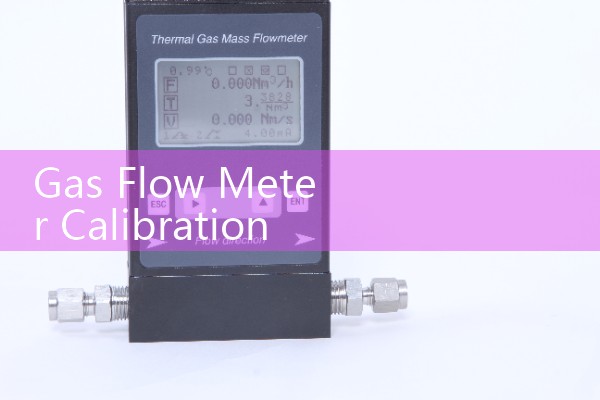
You still need to control the inlet pressure. Because the displaced volume changes with temperature. The ideal setup is a pressure regulator, a PT100, and a barometric pressure sensor. Record all values in a calibration certificate. This gives you traceability to ISO 17025.
For oil and gas users, a piston prover is not only for gas. But for gas flow, it works best for low flow and high repeatability. We recommend a piston prover for thermal mass flow meters and small Coriolis meters in air or nitrogen service.
How Silver Instruments Supports Your Calibration Bench
Silver Instruments is not a calibration lab, but we supply the flow meters and process instruments used on calibration systems. We provide Coriolis mass flow meters, electromagnetic flow meters, ultrasonic flow meters, vortex flow meters, and oval gear flow meters. For calibration bench builders, we often supply a master flow meter with a 4-20 mA HART output and a calibration certificate.
We have supplied flow meters to a paint manufacturer in Southeast Asia. That customer used a Coriolis mass flow meter as a master meter for solvent batching. For gas calibration, we worked with a gas distributor in Malaysia that needed a vortex flow meter with a temperature compensation function.
If you are building or upgrading a gas flow calibration bench, send us your gas type, pressure in bar, temperature in Celsius, pipe size DN, and flow range. We will suggest a suitable master flow meter and transmitter.
FAQ
What is the difference between a piston prover and a bell bench?
A piston prover uses a moving piston in a cylinder. It suits low flow and field use. A bell bench uses an inverted bell in a sealing liquid. It suits larger volume flow meters in a workshop.
Which ISO standard covers gas flow calibration?
ISO 17025 covers general competence for calibration laboratories. ISO 9300 covers critical flow Venturi nozzles for gas flow.
Can a piston prover calibrate a Coriolis mass flow meter?
Yes, for gas flow under 50 normal cubic meters per hour. The Coriolis meter measures mass flow. The piston prover gives a volume standard. You must apply gas density correction.
Does Silver Instruments sell calibration equipment?
We supply the flow meters and transmitters used on calibration benches. We do not sell bell benches. But we can help you select the correct master meter for your bench.
How do I get a quote for a master flow meter?
Contact us by Tel: +86-25-68650347, Whatsapp: +86-25-52155837, WeChat: +86 15365082610. Tell us your gas, pressure, temperature, DN, and flow range.
 Hot News
 Related AD