

『Flow Meter on Anesthesia Machine: Overview of Engineering Principles for Medical Gas Monitoring』Related information(flow rotameter|digital flow meter|balo meter|hydraulic flow meter|volumetric meter|positive displacement meter|pitot tube flow meter|displacement meter|cfm meter|variable area flow meter|inline flow meter|differential pressure flow meter|calibrated flow meter|velocity meter|paddle wheel flow meter|oval gear flow meter|anemometer hvac|multiphase flow meter|doppler flow meter|thorpe tube flowmeter|heat flow meter)
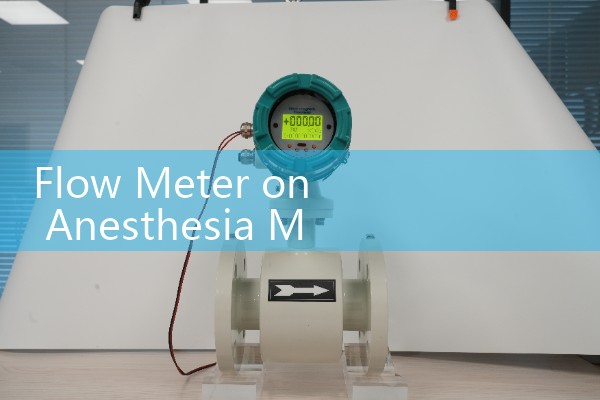
Flow Meter on Anesthesia Machine: Overview of Engineering Principles for Medical Gas Monitoring
Quick Answer: Flow meters on anesthesia machines regulate and monitor oxygen, air, and nitrous oxide delivery to the patient. Variable area flow meters are common for low pressure gas circuits, while thermal mass flow meters provide better accuracy and a 4-20 mA HART signal for medical gas monitoring systems. Choose a meter with gas-specific calibration, DN15 to DN25 process connections, and a pressure range that covers 0 to 10 bar.
Why Gas Flow Measurement Matters in Anesthesia Machines
An anesthesia machine mixes medical gases before the vaporizer. A flow meter sits on each gas line. It gives the anesthesiologist a real time reading of oxygen, air, or nitrous oxide flow. The reading is not optional. It prevents hypoxic gas mixtures and confirms that the patient receives the set tidal volume.
Most machines in Southeast Asia and Latin America operate with flow ranges from 0 to 10 L/min. Some emergency settings use up to 15 L/min. The flow meter must respond quickly when the clinician adjusts the needle valve. A slow reading causes delayed oxygen delivery.
In practice, many engineers skip routine flow meter checks. That is a risk. A calibration drift of 5 percent can shift the oxygen to nitrous oxide ratio enough to harm a patient. Medical gas flow meters need annual verification against a reference standard.
Types of Flow Meters Used in Anesthesia Machines
Three types dominate medical gas circuits. Variable area flow meters, also called rotameters, are the classic choice. Thermal mass flow meters are gaining ground in digital monitoring systems. Some research units use differential pressure flow meters with laminar flow elements.
Variable area meters are simple. A float moves inside a tapered glass or polycarbonate tube. The gas flow lifts the float. The float position on a scale gives the flow rate. No external power is needed. That is a big advantage in low resource hospitals.
Thermal mass flow meters measure gas flow by heat transfer. Two sensors sit in the gas stream. One sensor is heated. The gas cools the heated sensor. The cooling rate is proportional to mass flow. This method gives a direct mass flow reading, not a volumetric reading that changes with pressure and temperature.
Variable Area Flow Meter Operating Principle
A variable area meter works on the balance of three forces. The float weight pulls down. The gas drag force pushes up. The buoyancy force also acts on the float. At a stable position, these forces balance.
The tube is tapered. The annular gap between the float and the tube wall increases as the float rises. More gas passes through the larger gap. The flow rate is read from the top edge of the float against a scale. For oxygen, the scale might read 0, 2, 4, 6, 8, and 10 L/min.
Gas density and viscosity affect the float position. That is why a flow meter calibrated for oxygen cannot be used for nitrous oxide without a correction factor. Most anesthesia machine manufacturers calibrate each tube for a specific gas. The tube label shows the gas name.
Thermal Mass Flow Measurement for Medical Gas Monitoring
Thermal mass flow meters are used when the anesthesia machine needs an electronic output. A 4-20 mA signal goes to the data logger or central monitoring station. Some models include HART communication for remote diagnostics.
This meter type handles low flows well. A unit with a DN15 connection can measure from 0.1 to 50 L/min of oxygen with an accuracy of plus or minus 1.5 percent of reading. The response time is usually under 1 second.
Because thermal mass flow meters measure mass flow, they do not need pressure and temperature compensation. This matters in humid coastal areas like Jakarta or Lagos. Ambient changes do not shift the reading as much as a volumetric device.
Silver Automation Instruments supplies thermal mass flow meters for gas monitoring applications. These meters work with air, oxygen, nitrogen, and nitrous oxide. They provide 4-20 mA HART output and can be ordered with ATEX Zone 1 approved enclosures if the gas panel is in a hazardous area.
Calibration and Gas Correction Factors
Flow meter accuracy
For a different gas, the correction factor uses the square root of the ratio of gas densities. Nitrous oxide has a higher density than oxygen. The same float position that shows 5 L/min for oxygen may indicate about 4 L/min for nitrous oxide. Exact values come from the manufacturer tables.
Most modern anesthesia machines have factory calibrated tubes for each gas. Field replacement requires matching the tube and float to the gas. A mismatch in a private hospital in Manila led to an oxygen delivery error. That case shows why labels matter.
We have seen this on customer sites many times. A gas flow meter shows a negative reading because the sensor was installed backwards. The fix is simple. Reverse the sensor or check the flow arrow.
Selecting a Flow Meter for Medical Gas Monitoring Systems
Medical gas monitoring is not limited to the anesthesia machine itself. Hospital pipelines, central gas supply panels, and test benches also need flow meters. For these applications, an industrial flow meter with 4-20 mA output is often suitable.
Start with the gas type, flow range, pressure, temperature, and pipe size. For a medical gas pipeline, a DN15 or DN25 thermal mass flow meter works well. If the flow range is 0.5 to 20 L/min, a small thermal mass meter is a better choice than a variable area meter.
Check the wetted materials. Medical oxygen requires clean materials that do not react with oxygen. Stainless steel 316L and PTFE are common. Do not use brass or carbon steel in high purity oxygen lines.
Here is the thing. A thermal mass flow meter costs more than a variable area meter. But it gives a 4-20 mA signal that a rotameter cannot give without extra sensors. Last year a distributor in Vietnam asked us for a gas flow meter with 4-20 mA output for a medical gas pipeline. The thermal mass meter was the best fit.
Silver Instruments Options for Gas Flow Monitoring
We supply industrial flow meters to customers in Southeast Asia, Oceania, Latin America, Africa, and the Middle East. Many distributors use our thermal mass flow meters for medical gas monitoring projects.
A typical configuration for oxygen monitoring uses a DN15 thermal mass flow meter. The flow range is 0.1 to 30 L/min. The process connection is compression fitting or G1/2 inch thread. The output is 4-20 mA HART. The local display shows flow in L/min. The body is 316L stainless steel. The accuracy is plus or minus 1.5 percent of reading.
If you are an EPC contractor building a hospital gas system, send us your gas type, pressure in bar, temperature in degrees Celsius, pipe size in DN, and flow range in L/min. We will recommend a meter and provide a quote within 24 hours.
Frequently Asked Questions
Question 1: Can an industrial flow meter be used on an anesthesia machine?
In most cases no. An anesthesia machine uses special variable area tubes calibrated for low flow and specific gases. Industrial flow meters are better for hospital gas pipelines and monitoring systems, not the machine itself.
Question 2: What is the typical flow range for oxygen on an anesthesia machine?
The typical flow range is 0 to 10 L/min for adult anesthesia. Some machines go up to 15 L/min for flush or emergency oxygen delivery.
Question 3: Why does gas density matter in a variable area flow meter?
The float position depends on gas density and viscosity. A meter calibrated for oxygen gives a wrong reading with nitrous oxide. Use a gas-specific tube or a correction factor.
Question 4: What output signal is best for medical gas monitoring?
A 4-20 mA HART signal is practical. It connects to PLCs, data loggers, and building management systems. Many engineers also request a local LCD display.
Question 5: How do I request a quote from Silver Automation Instruments?
Send your gas type, pressure in bar, temperature in degrees Celsius, pipe size in DN, and flow range in L/min. Use Tel: +86-25-68650347, Whatsapp: +86-25-52155837, or WeChat: +86 15365082610.
 Hot News
 Related AD