

『Flow Meter Measurement Unit Framework: Converting Mass, Volume, and Velocity Metrics』Related information(flow rotameter|digital flow meter|balo meter|hydraulic flow meter|volumetric meter|positive displacement meter|pitot tube flow meter|displacement meter|cfm meter|variable area flow meter|inline flow meter|differential pressure flow meter|calibrated flow meter|velocity meter|paddle wheel flow meter|oval gear flow meter|anemometer hvac|multiphase flow meter|doppler flow meter|thorpe tube flowmeter|heat flow meter)
Flow Meter Measurement Unit Framework: Converting Mass, Volume, and Velocity Metrics
Quick Answer: Mass flow, volume flow, and velocity are three separate unit classes. Each class fits a different sensor technology and field condition. Send your pressure in bar, temperature in °C, pipe size in DN, and flow range to Silver Instruments and get a direct unit mapping for your application.
Here is the thing: most flow meter ordering mistakes start at the unit level. A buyer asks for a 50 m3/h gas meter but the data sheet says normal cubic meters per hour. That is not the same process condition. We have seen this on customer sites in Vietnam, Nigeria, and Chile.
Why the measurement unit framework matters
Flow meters measure one primary quantity. Coriolis meters read mass directly. Electromagnetic and ultrasonic meters read flow velocity first then calculate volume flow. Oval gear meters count fixed volumes. Thermal mass meters read gas mass flow using heat transfer. The transmitter output must match the DCS or SCADA tag in kg/h, m3/h, or m/s.
A water utility in the Philippines ordered a DN100 electromagnetic flow meter with a display in m3/h. The SCADA system expected L/s. The converter had to be re-scaled. This is not a sensor fault. That is a unit mismatch.
Mass flow units and meter selection
Use mass flow when heating value, dosing mass, or gas consumption matters. Units include kg/h, kg/min, t/h, and g/s. Liquid mass flow for fuels and concentrated chemicals often uses kg/h or t/h. Gas mass flow uses kg/h or standard cubic meters per hour with a density reference.
The core conversion is mass flow equals volume flow multiplied by density. For water at 20 °C, 1 m3/h equals about 998 kg/h. For diesel at 30 °C, 1 m3/h equals about 830 kg/h depending on the grade. So a 5 m3/h diesel line is not 5,000 kg/h. Most engineers skip this part often.
For mass flow, Silver Instruments Coriolis mass flow meter is the direct choice. A DN15 Coriolis meter can handle small dosing lines. A DN50 Coriolis meter can read 0 to 30,000 kg/h depending on fluid density and pressure drop. Thermal mass flow meters are better for air, biogas, and natural gas lines from DN25 to DN200.
Volume flow units and liquid meter selection
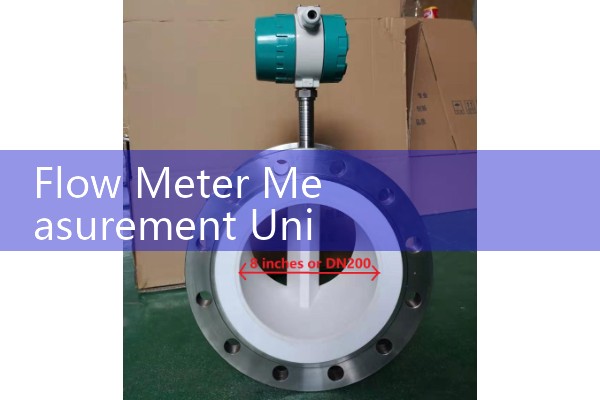
Volume flow is the most common unit for water, wastewater, diesel, and food liquids. Units include m3/h, L/h, L/min, and m3/day. Electromagnetic flow meters suit conductive liquids from 5 µS/cm and higher. Ultrasonic flow meters fit water and wastewater lines where clamp-on access or no pressure loss matters.
A seawater desalination plant in Saudi Arabia needs a seawater flow meter for high pressure brine lines. Silver Instruments electromagnetic flow meter with a PTFE liner and titanium electrodes works for 25 bar and 60 °C seawater. The output can be 4-20 mA HART with totalized flow in m3.
Oval gear flow meters are volume meters for clean viscous liquids. Diesel, palm oil, and glucose syrup are typical. A 2 inch oval gear flow meter for diesel can measure 10 to 200 L/min. For fluids above 100 cP, oval gear or Coriolis meters are more stable than a turbine meter.
 >
>
Velocity units and gas or steam meter selection
Velocity units describe the flow profile inside a pipe. m/s and ft/s are standard. Vortex flow meters read velocity and then output volume or mass flow with density compensation. Steam boiler applications often use kg/h or t/h but the physical sensing element sees velocity.
A palm oil mill in Indonesia uses a DN80 vortex flow meter for saturated steam at 10 bar. The velocity range is 3 to 35 m/s. The flow computer converts velocity to kg/h using steam density. For gas lines, thermal mass meters directly read gas mass flow in kg/h or scfm with a temperature reference.
Conversion framework and order data
Start with these three units: mass, volume, velocity. Then state the fluid, operating pressure, operating temperature, pipe size, and full scale flow. Density follows from pressure and temperature. The flow meter output unit should match the DCS or SCADA tag.
For liquid, a 4 inch line at 2 m/s water velocity equals about 58 m3/h. For gas at 7 bar and 25 °C, a DN50 line at 20 m/s delivers a higher mass flow than at 1 bar. Because density changes with pressure and temperature, gas flow needs both values before the order.
A PT100 temperature sensor can feed the flow computer for density compensation. Silver Instruments pressure transmitters and paperless recorders can log the same 4-20 mA signal for audit records. For a solvent area classified ATEX Zone 1, the Coriolis sensor and transmitter can be supplied with the relevant certificates. Send us your pressure in bar, temperature in °C, pipe size in DN, and flow range. Call Silver Instruments at Tel +86-25-68650347 or WhatsApp +86-25-52155837. We will confirm the flow meter type and output unit before manufacturing.
FAQ
What is the difference between mass flow and volume flow?
Mass flow is the amount of material in kg or t that moves per unit time. Volume flow is the space that material occupies in m3 or L per unit time. You need fluid density to convert one to the other.
Which flow meter types measure mass flow directly?
Coriolis mass flow meters and thermal mass flow meters. Silver Instruments Coriolis meters handle liquids and gases. Thermal mass meters handle clean gas lines.
How do I convert velocity to volume flow?
Volume flow equals pipe cross sectional area multiplied by average flow velocity. For a round pipe, area is pi times radius squared. The flow meter transmitter does this calculation internally.
Why does gas flow require pressure and temperature?
Gas density changes with pressure and temperature. A gas line at 10 bar has more mass in the same volume than at 1 bar. That changes the relation between m3/h and kg/h.
What data should I send for a flow meter quote?
Fluid name, operating pressure in bar, temperature in °C, pipe size in DN, flow range, and required output. For conductive water use an electromagnetic flow meter. For oil or gas use a Coriolis, oval gear, or thermal mass meter depending on the flow range. Contact Silver Instruments by Tel +86-25-68650347, WhatsApp +86-25-52155837, or WeChat +86 15365082610.
 Hot News
 Related AD