

『Ge Flare Gas Flow Meter Technology: High-Velocity Digital Sizing in Petroleum Refinery Stack Loops』Related information(flow rotameter|digital flow meter|balo meter|hydraulic flow meter|volumetric meter|positive displacement meter|pitot tube flow meter|displacement meter|cfm meter|variable area flow meter|inline flow meter|differential pressure flow meter|calibrated flow meter|velocity meter|paddle wheel flow meter|oval gear flow meter|anemometer hvac|multiphase flow meter|doppler flow meter|thorpe tube flowmeter|heat flow meter)
Flare Gas Flow Meter Technology for Petroleum Refinery Stack Loops
Quick Answer: For high velocity flare gas measurement in refinery stack loops, Silver Instruments recommends a digital insertion ultrasonic flow meter or a thermal mass flow meter with a wide turndown ratio. These meters handle gas velocities up to 120 m/s, pipe sizes from DN100 to DN600, and process temperatures up to 250 °C. Most installations need ATEX Zone 1 certification, 4-20 mA HART output, and a sizing review based on actual pressure, temperature, and gas composition.
Flare gas measurement in petroleum refineries is not a simple flow reading. The stream changes composition during upset conditions. Mol weight shifts, temperature spikes, and velocity swings cause large errors if the meter is not sized for the full operating window.
Why High Velocity Digital Sizing Matters in Stack Loops
In practice, a refinery flare header may run at 2 m/s during normal operation and then jump to 80 m/s during a relief event. A thermal mass sensor with a 100:1 turndown ratio covers this range on one meter. Digital signal processing filters out pressure pulsations and noise from valve chattering.
High velocity digital sizing is not about picking a line size from a table. It starts with the worst case. You take the maximum relief load, the minimum normal flow, the gas molecular weight range, and the back pressure at the stack tip. One Southeast Asian refinery we worked with had a flare header sized at DN400. The normal flow was only 3 percent of the full scale. A standard vortex meter lost signal at low flow. We supplied a thermal mass flow meter with a low flow cut-in at 0.5 m/s. That solved the zero drift issue on the DCS.
Meter Selection for Flare Stack Loop Service
Silver Instruments offers two main meter types for flare gas loops. A thermal mass flow meter works well for insertion mounting in large pipes. It has no moving parts, measures mass flow directly, and tolerates wet gas better than a vortex meter. The second option is a digital ultrasonic flow meter for flare gas. This meter handles high velocity gas up to 120 m/s and works on pipe sizes from DN80 to DN600. An ultrasonic path with digital transit time processing gives a stable reading even when the gas composition shifts.
Do not use a Coriolis meter on a flare stack loop unless the line is small and the gas is clean. Coriolis meters add pressure drop and cost. For flare headers, insertion thermal mass or clamp-on ultrasonic is usually the better fit.
Here are the parameters we ask for on a flare gas RFQ. Send us your pressure in bar, temperature in °C, pipe size in DN, and flow range in kg/h or Nm3/h. We also need the gas composition if it is known. A refinery in the Middle East sent us a composition with 30 percent hydrogen, 20 percent methane, and 15 percent carbon dioxide. That mixture changes speed of sound. A standard ultrasonic meter would need a composition input. Our digital sizing tool applies a gas compressibility factor and a speed of sound correction before quoting. This avoids a 6 to 8 percent error at high velocity.
Installation and Compensation for Refinery Flare Loops
Insertion meters need a hot tap or a flanged nozzle on the header. Most engineers skip this part. You need at least 10D of straight run upstream and 5D downstream for an insertion thermal mass meter. For an ultrasonic meter, the straight run requirement can be higher if there is a bend or a control valve nearby. A dual path ultrasonic meter reduces the straight run requirement to 15D ups
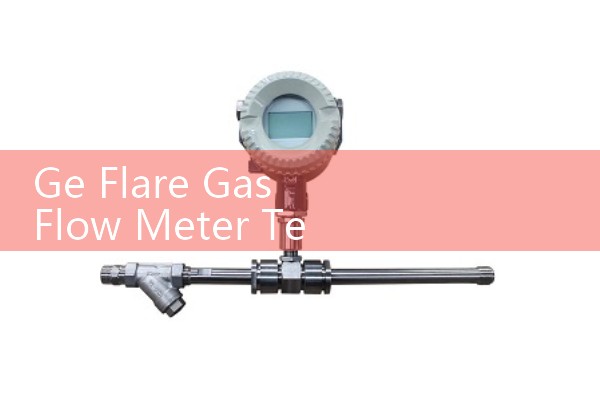
Temperature compensation is critical. A thermal mass meter measures heat transfer from two RTDs. One RTD is heated. The other measures the gas temperature. Changes in gas composition shift the thermal conductivity. If the gas has high hydrogen content, the meter will read high unless the calibration gas matches the process. In practice, we calibrate flare gas meters on air and then apply a gas correction factor in the transmitter. For hydrogen service, that factor can be 1.2 to 1.6 depending on the blend.
Pressure transmitter input is often paired with the flow meter. The flow computer in a Silver Instruments SUL-300 ultrasonic meter accepts a 4-20 mA pressure input and a PT100 temperature input. It calculates standard volumetric flow, mass flow, and actual velocity. The output can be 4-20 mA HART, Modbus RTU, or pulse.
Common Mistakes in Flare Meter Sizing
One mistake is sizing only for maximum flow. The meter then loses resolution at low flow. Another mistake is ignoring back pressure effects at the stack tip. High back pressure reduces gas velocity at the meter. A velocity meter reading in actual cubic meters per hour will not match the standard flow unless pressure and temperature compensation are active.
We have seen a customer site in Malaysia where a flare meter was installed too close to a pressure safety valve. The flow was not steady. The reading jumped from 0 to full scale every few minutes. The fix was not a different meter. We moved the insertion point to a straight section after a knockout drum. The signal became stable within one hour.
FAQ
Q: What is the typical accuracy for a flare gas flow meter?
A: A thermal mass insertion meter offers 1.0 to 2.0 percent of reading above 50 percent of flow range. A digital ultrasonic meter can reach 0.5 percent of reading under stable composition. The installed accuracy depends on straight run, gas composition, and temperature swings.
Q: Can one meter cover both normal and upset flare flow?
A: Yes. A thermal mass meter with a 100:1 turndown ratio covers most refinery flare headers. For very high velocities above 60 m/s, an ultrasonic meter with a 120 m/s limit is a better fit. Sizing starts with the maximum relief load and the minimum purge flow.
Q: Do flare gas meters need special safety certification?
A: Most refinery stack loops require ATEX Zone 1 or IECEx Zone 1 certification. The sensor, transmitter, and cable glands must match the area classification. Silver Instruments supplies flare gas meters with ATEX Zone 1 II 2 G Ex db IIC T6 ratings.
Q: What information is needed for a quote?
A: Send us your pressure in bar, temperature in °C, pipe size in DN, and flow range in kg/h or Nm3/h. Include gas composition if available. We also need the line size and the area classification. This lets us confirm the meter body material, the insertion length, and the calibration range.
Q: Can the flow meter send data to a plant DCS or SCADA?
A: Yes. Standard outputs include 4-20 mA HART, Modbus RTU, and pulse. The transmitter can store a 30 day data log. A pressure transmitter input and a PT100 input allow standard flow calculation inside the meter electronics.
For a flare gas flow meter quote from Silver Automation Instruments, send us your pressure in bar, temperature in °C, pipe size in DN, and flow range in kg/h or Nm3/h. Tel: +86-25-68650347. Whatsapp: +86-25-52155837. WeChat: +86 15365082610.
 Hot Blog
 Related AD