

『Flow Meter on Suction Side of Pump Installation: Technical Considerations for Reducing Cavitation』Related information(flow rotameter|digital flow meter|balo meter|hydraulic flow meter|volumetric meter|positive displacement meter|pitot tube flow meter|displacement meter|cfm meter|variable area flow meter|inline flow meter|differential pressure flow meter|calibrated flow meter|velocity meter|paddle wheel flow meter|oval gear flow meter|anemometer hvac|multiphase flow meter|doppler flow meter|thorpe tube flowmeter|heat flow meter)
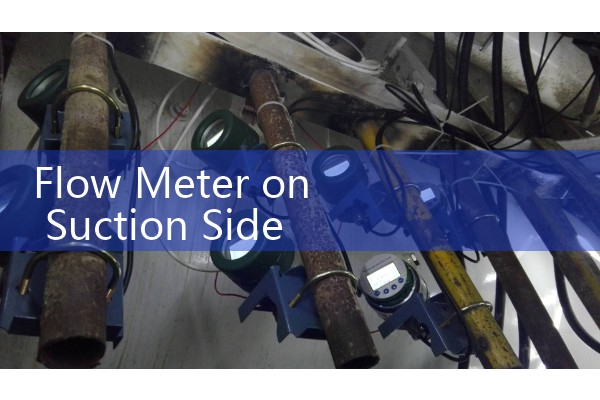
Flow Meter on Suction Side of Pump Installation: Technical Considerations for Reducing Cavitation
Quick Answer: Install a flow meter on the pump suction side only if its pressure drop stays below 0.02 bar and NPSH margin remains above 1.5 m. Electromagnetic and clamp-on ultrasonic meters work best because they add little or no restriction. For small pipes under DN80 or hot liquids near boiling point, put the meter on the pump discharge side.
Why Suction Side Flow Measurement Creates Cavitation Risk
Cavitation starts when absolute pressure at the pump inlet falls below liquid vapor pressure. A flow meter on the suction line adds local pressure drop. That reduces NPSHa. When NPSHa gets close to NPSHr, vapor bubbles form and collapse at the impeller. The result is pitting, noise, vibration, and lower flow output.
Most engineers skip this part. They check pipe size and pump curve but forget the flow meter restriction. We have seen this on customer sites many times. In Southeast Asia, process water often enters at 30 °C to 35 °C. At those temperatures, the margin is already small.
Flow Meter Pressure Drop Compared
For a clean water suction line, keep total pressure drop from tank to pump inlet under 0.2 bar. The meter should add less than 0.02 bar. A DN100 vortex meter can add 0.05 bar to 0.15 bar depending on flow. An orifice plate can add even more. That is why we do not recommend them on suction lines.
Full bore electromagnetic flow meters from Silver Automation Instruments have no moving parts. Pressure loss across a DN100 meter is under 0.01 bar at 100 m³/h for cold water. That is less than a fully open ball valve or long radius elbow.
For existing pipes, a clamp-on ultrasonic flow meter adds zero pressure drop. It mounts outside the pipe. Accuracy is normally 1 percent of reading for clean liquids with limited solids or bubbles.
Electromagnetic Flow Meter Details for Suction Lines
Silver Instruments supplies electromagnetic flow meters from DN15 to DN300 with PTFE or rubber liner and 316L or Hastelloy electrodes. Typical outputs are 4-20 mA HART, pulse, and RS485 Modbus. The meter must be full of liquid. On a suction line, use a flooded suction or a foot valve. Mount electrodes in the horizontal plane to avoid gas pocket errors.
For a DN80 pump skid, a full size DN80 meter is safer than reducing to DN50. A smaller meter doubles velocity. That adds four times the pressure loss. This is a common mistake in small water booster skids.
Coriolis and Other Meter Notes
A Coriolis mass flow meter can work on a suction line only with a straight tube design and a pressure drop calculation. For viscosity above 50 cP, keep velocity under 0.5 m/s. Curved tube designs often add too much restriction. In practice, use a Coriolis meter on the discharge side unless the application requires direct mass measurement on the inlet.
Thermal mass flow meters suit gas lines and should not be used for liquid suction. Oval gear meters can work for clean diesel or lubricating o
Installation Rules for DN15 to DN300 Suction Pipes
Keep the meter bore equal to the pipe ID. Do not reduce line size. For electromagnetic meters, keep 5D to 10D upstream from the pump suction flange. For clamp-on ultrasonic meters, keep 10D downstream from the last elbow and 5D upstream from the pump.
Avoid installing the meter after a partially closed butterfly valve or an unstrained filter. That turbulence changes the velocity profile and can create false readings.
Pressure Monitoring and Specific CTA
We recommend a 4-20 mA HART pressure transmitter on the suction line. Use a 0-1 bar or 0-2 bar absolute range. Compare live suction pressure with vapor pressure at operating temperature. If the difference drops below 0.5 bar, clean the strainer or raise tank level.
A paint manufacturer in Vietnam installed a DN65 oval gear flow meter on a solvent pump suction. The pump lost flow after two weeks because the meter added enough restriction to cause cavitation at 40 °C. We replaced it with a DN65 electromagnetic meter with PTFE liner. The pump noise dropped and flow became stable.
Send us your suction pressure in bar absolute, liquid temperature in °C, pipe size DN, flow range in m³/h, and liquid conductivity. Tell us the pump NPSHr from the vendor curve. Our engineers will propose a meter with pressure drop below 0.02 bar.
Contact Silver Automation Instruments at Tel: +86-25-68650347, Whatsapp: +86-25-52155837, WeChat: +86 15365082610. We supply electromagnetic, ultrasonic, Coriolis, vortex, oval gear, and thermal mass flow meters for projects in Southeast Asia, Oceania, Latin America, Africa, and the Middle East.
FAQ: Flow Meters on Pump Suction Side
Q1: Can any flow meter be installed on a pump suction line?
No. The meter must have low pressure drop and the total suction line loss must still leave enough NPSH margin. Electromagnetic and clamp-on ultrasonic types are preferred.
Q2: How far should a flow meter be from the pump inlet?
For full bore electromagnetic meters, 5D to 10D upstream is usually enough. For clamp-on ultrasonic meters, keep 10D downstream from the last elbow and 5D upstream from the pump.
Q3: What is the maximum pressure drop allowed for a suction side flow meter?
Keep it under 0.02 bar for clean water lines. For hot liquids or solvents near the boiling point, keep it under 0.01 bar and add a pressure transmitter for live NPSH monitoring.
Q4: Is a Coriolis mass flow meter safe for pump suction?
It can be safe for low viscosity clean liquids with a straight tube design. Curved tube Coriolis meters often add too much restriction for suction side use.
Q5: Which flow meter has zero pressure drop on the suction side?
A clamp-on ultrasonic flow meter has zero internal pressure drop because the transducers mount outside the pipe. It is the best choice for retrofits and pipes above DN100.
 Hot Blog
 Related AD